Here is the Kushner article I read at the Launch. I have highlighted some inspiring sections of the article, but definitely read the whole thing. He articulates our challenge: to create an event where the audience has to work to make sense of the world.
“The Art of the Difficult”
by Tony Kushner
An essay on “difficult art”–art that challenges an audience–in the August/September 1997 issue of Civilization. Full text after the jump.
---------------------------------------------------------------------
The best theater is hard work for audiences. But it rewards us by making us rise to its challenge.
Last year I sat in a theater in a state of tremendous excitement, distress, joy, envy, grief, arousal, happiness (which is different from joy) and despair (which is different from grief). I was watching the last few moments of the first half of a play, certainly one of the most remarkable plays written in our time, staged brilliantly by one of our greatest directors, performed by a wonderful cast led by an actress of extraordinary courage, depth, beauty and skill. I wanted to whoop and holler when the stage went to black at intermission, and I was sure the rest of the audience would join me; to my surprise the applause was polite and restrained, the muffled, smattering splatter sound an audience makes when it’s respectful and confused, when it is thinking hard and not entirely happy to be required to do so, a sound like clapping with wet woolen mittens on.
More often than not, when I go to the theater my feelings range from deep boredom to annoyance to depression to bewilderment. This is almost always the case when attending hit plays or musicals on Broadway: I won’t name names, but some really awful stuff has been immensely successful, and it’s always a particularly degrading moment for the human race when an audience stands up and cheers for something it cannot possibly have enjoyed. I say to myself that they are cheering their ability to afford the uncomfortable seats they’ve been squirming in: “Hooray for us! We aren’t poor! We can squander hundreds of dollars on joyless claptrap and tripe and feel only a moment’s rage, nausea and regret! And we can still afford dinner afterward, which we know will be good!”
Let me return to the pleasurable time I spent in the theater I first mentioned, which was the New York Shakespeare Festival’s Joseph Papp Public Theater, and the play, Suzan-Lori Parks’s Venus, directed by Richard Foreman, starring Adina Porter. It is unlikely that, unless you work in the theater or follow it fairly closely, you will have heard of these talented people, or of this play. This is a shame. Foreman is an artist who for 30 years has commanded international respect, who is recognized as one of the key figures in modern theater, whose work has shaped the ideas and aesthetics of innumerable subsequent playwrights (myself included), directors, actors and designers. Suzan-Lori Parks is believed to be, by many theater professionals (myself included), one of the most important dramatists America has produced. Of Adina Porter you will probably hear, sooner or later, for all good actors wind up on television or in films. But of Adina Porter as the Venus Hottentot, which is one of those legendary performances even people who weren’t born yet will talk about, you have probably heard nothing. In a world obsessed to the point of madness with fame, obscurity is not a tragedy, but it is an injustice. And justice was not done in its time to Venus, which, being a stage production, not a film, not a tape or a painting or a book, is gone forever. The play alone remains.
Soon you will be able to buy the play in a bookstore, as you can now purchase a number of Parks’s plays. You won’t find them “easy reads” any more than you might have found them “easy sits.” Perhaps they’re even harder reads than sits. Reading Venus is an incomplete experience of the work, as reading any play must necessarily be, since a play in book form is a little like an octopus out of water. I once saw a documentary in which a marine research team had hauled a big octopus out of its element and left it on the deck of their ship, a hideous, jumbled, helpless mass of suckers and tentacles. ALmost helpless: While its captors’ backs were turned, the octopus crept and slithered and pulled itself to the edge of the ship and fell overboard. A camera attached to the keel of the boat caught the moment when the octopus hit the water, transforming instantly into a thing of grace and beauty, of perfect design–the octopus flowered, it blossomed, it really looked like a rosebud opening up.
I’m not calling Venus a jumbled mass of suckers and tentacles awaiting immersion. The play is delicious and moving and funny and frightening on the page, just as it was on the stage, but the text is haunted, as all plays are, by unsatisfied desires. One is nagged as one reads by impatience and curiosity. about the spectacle-in-potential (”How would they do that? What would that look like?”) and by the phantom audience as well, for a play, unlike most other writing, is never written for a solitary reader, for an audience of one (”What does the rest of the mob think?” you will ask yourself). A play that doesn’t provoke these distractions in a reader is probably not a very good play. I have never wanted to see Eliot’s Murder in the Cathedral on its feet, onstage. Reading it was punishment enough.
What is Venus about? I will quote from the play, from the speech of a character named the Negro Resurrectionist:
THE NEGRO RESURRECTIONIST (rest)
“Early in the 19th century? a poor wretched woman was exhibited in England under the appellation of the Hottentot Venus. With an intensely ugly figure, distorted beyond all European notions of beauty, she was said to possess precisely the kind of shape which is most admired among her countrymen, the Hottentots.”
The year was 1810, three years after the Bill for the Abolition of the Slave-Trade had been passed in Parliament, and among protests and denials, horror and fascination Her show want or. She died in Paris 5years later: a plaster cast of her corpse was displayed, along with her skeleton, at the Musee de l’Homme.
Venus addresses a number of subjects, including race, gender, science, love, slavery, colonialism, art, pleasure and death. It tells a tragic story discursively, digressively, elliptically, mockingly, shockingly, heartbreakingly. It shows things you almost never get to see onstage and might wish you weren’t seeing. I don’t refer to the usual pornography our culture serves us of gym-hard bodies being sliced, diced and mutilated by large, dysfunctional machinery. Venus is based on the historically true tale of a black woman whose aforementioned “horror and fascination” derived from a large (probably not all that large) posterior. To make this woman the heroine of a serious tragedy is daring and dangerous; here is a play that treads the line between pathos and absurdity, which is very hard to do, a line walked by all the great dramatists, Shakespeare and Chekhov especially. Venus also treads the fault lines of several American cultural sensitivities, moving racial cliches and stereotypes out of the unlit mutterers’ corners and back to center stage, where the sight of them makes us wince. Venus expresses a global empathy, a mourning for all of suffering humanity and, at the same time, an anger at oppression and oppressors, an indictment of wrongs yet to be righted. All the best of Parks’s writing does this: acknowledging the tragic, the immutable, while not extinguishing the possibility of mutation, of change. In a sense, she shows how the eternal and tragic amplify the necessity of historical change. “Love,” says the Venus Hottentot, in a beautiful understatement that perhaps describes the reclamation of the possible from the tragic, the unalterable, “Love helps in times of hardship.”
The first paragraph of the speech I quoted, which appears at the end of the play (after every bit of fact the speech contains is already known to the audience), is in quotations because it is excerpted from real historical text, while the second paragraph, not marked, is Parks’s original. The actor playing the Negro Resurrectionist, and his director, will have to figure out how to “play” the quotation marks, if they decide it’s necessary to do that The playwright thought it necessary to include them. She uses the word rest as a stage direction where other playwrights usually use the word pause. She is the only American playwright I know who makes use of footnotes, which also present a conundrum for the production team: How do you stage a footnote? Or do you? Parks doesn’t tell you. Her plays are full of these sorts of provocations. A director, actor or designer who believed it to be his or her job to do the footnotes, quotation marks and rests “correctly” would soon find themselves utterly lost. As with all great theater, you can approach this playwright only if you have a sense of humor. Parks plays with plays and in doing so inspires others to do the same. She has fun, productive fun, with her form’s dual nature, as literature and as “script.” She rubs two forms (play-book and play-in-production), the two functions (to-be-read and to-be-watched-and-heard), against each other, in order to generate some heat, some excitement, sparks, something new.
There is no correct way to stage a footnote or a quotation mark. It is not, technically speaking, possible. There is only the challenge of the impossibility, and the extent to which the imaginations involved address themselves to these challenges intelligently and, well, imaginatively. It’s a small but salutary thing, to be challenged to stage the unstageable. Anytime we’re asked to do the impossible, even a small impossible, and we do it, worlds of possibility open up.
So too is the audience asked to participate in this impossible, or at least difficult, enterprise. At the performance of Venus I attended, a woman seated next to me turned to me at intermission and said, “You’re really enjoying this, aren’t you?” I said I was ecstatic. She then asked me to explain the play to her. “I don’t think I understand the symbolism,” she said, looking, I am sure, exactly the way she looked when as a conscientious high-school senior she flubbed an essay question in her American Lit class. I liked this woman, who, about 50 years old, is of a generation that still believes the responsibility to understand is theirs, as opposed to my generation and those that have followed, which think it is the text’s responsibility to be simple and seductive and unchallenging. And I felt bad for her, because she felt excluded from something she recognized had merit and meaning, addressed issues she knew mattered. I was annoyed that our educational system hadn’t equipped this woman better, for she was clearly intelligent and hungry, and at least unthreatened enough by the unknown that she could risk asking a stranger for directions, rather than remain lost.
But there wasn’t much help I could give. It was only a 15-minute intermission, and this being a Suzan-Lori Parks play, one of the central characters used the time to lecture the portion of the audience that didn’t go to the bathroom or to the lobby for a Coke. (”Please Sir,” the lecturer repeats in his intermission harangue, an anatomy lesson, “indulge yourself. Go take uh break. / Ive got strong lungs: / So please, if you need air, excuse yrself. / Youll hear me in the hallway.”) I had to say hurriedly to the perplexed woman that this wasn’t a play of symbols, that you didn’t need a key to unlock its secrets, it wasn’t speaking in code. Venus is as literal as it is literary. Its complexity stems not from a coherent, cryptic language of metaphor but rather from the author’s determination to cast away the conventions and niceties of the narrative dramatic form that might close off interpretation, meaning, insight. Parks is saying: Here is a moment of incredibly dense history. All sorts of things convene at this moment, across and through the body of this woman. To risk understanding this is to risk making or encountering something unfamiliar or something ungainly–even, perhaps, making and encountering a mess, an unsuccess.
Oh reader, list! I’ve chartless voyaged. With compass and the lead, we had not found these Mardian Islands. Those who boldly launch, cast off all cables; and turning from the common breeze, that’s fair for all, with their own breath, fill their own sails. Hug the shore, naught new is seen; and “Lard ho!” at last was sung, when a new world was sought.
That voyager steered his bark through seas, untracked before; ploughed his own path mid jeers; though with a heart that oft was heavy with the thought, that he might only be too bold, and grope where land was none.
So I…. Fiery yearnings their own phantom future make, and deem it present. So if after all these fearful, fainting trances, the verdict be, the golden haven was not gained:–yet, in bold quest thereof better to sink in boundless deeps, than float on vulgar shoals; and give me, ye Gods, an utter wreck, if wreck I do.
That’s Herman Melville in his great and almost entirely ignored novel Mardi. The 19th-century novelist, like the Elizabethan dramatist, faced with a world of overwhelmingly rapid transformation and an unfathomable complexity, created big, unwieldy art with impossibly outsize ambition. This was, to an extent, presumption, grandiosity, arrogance on the part of the writer, trying to conquer the world and enfold it in a book. But it was also an art of desperation, a life-and-death attempt to understand comprehensively what was happening to the planet, since even in the 19th century, even in the 16th century for that matter, discerning people could see that whatever was happening, it wasn’t completely beneficent and laudable. These writers knew that the received structures of form and narrative they’d inherited from bygone ages had ossified to an extent and had become prisons, obstructions, blinders, obstacles to deeper comprehension. To push through, to dive deeper, as Melville, who liked his metaphors nautical, put it, some mastery of received forms might have to be sacrificed, even if the consequence was “an utter wreck.”
For what does it mean to make an entirely simple and clear work of art about a subject of great complexity? What does it mean, for instance, to write a shapely sonnet about a concentration camp? This is why I love the film Shoah, which is so unwieldy and almost frantic, so painful in its excruciating self-awareness, so reticent and at the same time so grotesquely nosy, and always aware of its nosiness, its sensationalist, rubbernecking proclivities: How else are we to approach the imponderable dark mountain we call the Holocaust? This is why I hate the film of Schindler’s List: For all of its crepuscular, ashy tonalities and its galumphing ponderousness, it’s too squeaky clean, it’s too careful, it betrays what it purports to represent, which was the antithesis of clean and careful, which was madness. Schindler risks nothing in attempting to make sense of the unfathomable; it only seeks to succeed, and so it’s finally shallow, successful (237 Oscars!) and can speak to the Holocaust only in Hollywood cliches. Sure, it made German audiences “think about the Holocaust.” Have you noticed that every five years something comes along that makes German audiences “think about the Holocaust”? And still they have in many ways some of the most draconian anti-immigration laws in Europe. They need to stop thinking so ostentatiously and to think more constantly, quietly and deeply instead.
Daniel Boyarin, the head of Talmudic Studies at the University of California at Berkeley, told me a story about a Hasidic rabbi who had two daughters, one of whom married a wealthy man. This daughter died in childbirth. After the funeral, during which the grieving husband had delivered a spectacular eulogy, he asked the rabbi for permission to marry the second daughter. The rabbi refused. “Why?” asked the surprised widower. “It’s permitted that I should marry her sister.” “Because,” replied the rabbi, “your eulogy was too eloquent. I don’t want my daughter married to a man whose heart is so shallow, whose grief isn’t any greater than that.”
An artist who breaks the vessels creates a lived connection, a connection viscerally felt by those in the audience who aren’t too frightened by the sound the breaking makes, between that which represents and that which is being represented. This is Difficult Art, not always artistically successful, though sometimes, as in the case of Venus, it is. Suzan-Lori Parks already shows signs of becoming a master at the form she’s helped to create, and there are very few playwrights, or writers of any kind for that matter, of whom this can be said.
But the success of Difficult Art, again, is sort of beside the point–or rather such work, if the connection is true and not just a matter of splashy effect, always partially succeeds and always partially, deliberately fails. It displays its failures alongside its successes as historical necessity, as honorable battle wounds, the detritus being evidence of its having been deeply abraded, grooved and glaciated by the Carborundum of history.
Such art demands effort from its audience, and effort is precisely what we are used to avoiding in the theater. Difficult Art needs to be assembled in collaboration with the spectator; it doesn’t come prepackaged by the artist. It insists on its spectators doing some of the work. In making these demands, Difficult Art seeks to teach a posture to its audience, a stance. And I deliberately write that the art, rather than the artist, seeks to teach, for this is instruction by example, not by preachment. Imitatio Christi, we learn by seeing the artist learn, and suffer the learning: The art is the evidence. We are meant to learn that we are born into a world in which what is easy, commonsensical and evident is very often a lie and that labor is required to make sense as much as it is to make shoes and houses and superhighways.The dream of moving an audience to some sort of action, rather than to tears, is not new. In the ’60s, theater artists did a lot of performances in which the actors would leave the stage and maul the spectators, who would usually (wisely) flee, unless they were too stoned to do so, or to care. I remember a great New Yorker cartoon of the time in which a supernumerary dressed as a priest of Ptah barks from the apron of the Metropolitan Opera stage at a startled tuxedoed and evening-gowned audience: “And you! What are you doing to help Aida and Radames? Will you just sit there and let them die?”
The action that can be demanded of a spectator in the theater is the action demanded of the dreamer by a dream, or by Jesus in the parables or by the Passover Haggadah, which does such a peculiarly meandering, fragmentary job of telling what is after all a simple story. The action required by each of these is thinking, piecing together, searching, interpreting, understanding.
All good art goads us into thought, and this should be as true of plays as of any other kind of art. Some very great dramatic art, like Shakespeare’s, manages to provide just as much simplicity and complexity as anyone could need or hope to manage. A good production of almost any Shakespeare play has the compelling narrative force of a wonderful fairy tale or bedtime story. The audience can choose to dive or can be subtly nudged or forcibly pushed by the production into deeper waters; or it can play in the shallow end. There’s something in such plays for both wise and foolish children.Now, at the end of the 20th century, we are heirs to a rather venerable tradition of Difficult Art, which in most media can point to antecedents stretching far back in time. Our century did not invent aesthetic experimentation, and much of the great art of the past was never any easier for its audiences, when first encountered, than the art of our own time has been for poor befuddled us. There has always been art antagonistic to the people and processes that consume it, there has always been art that relished a good fight with the monied classes who can best afford it. If, in this more bloodily antagonistic, more openly troubled century, the art has gotten more bloody and antagonistic as well, there’s little cause for surprise. There is cause for alarm, but the causes for this alarm are not to be found in the art but in the world that occasioned it. Art has always had its Academy of the Difficult, with one possible exception, and that is the theater.
The theater has almost always been meretricious, gregarious, eager to please, even at its most exalted something of a cheap date. At its most exalted it has always been many other, more impressive things as well, of course, but even when you’re producing King Lear or The Bacchae, plumbing the most abysmal of abysms, you’re puttin’ on a show. The greatest theatrical art has traditionally striven to “stand the crack of the penny in the slot pyanny,” as Ezra Pound once wrote, and surely far better people (though not better poets) than Pound, such as Shakespeare, Ibsen and Brecht, would have agreed with him.
But we playwrights, even we meretricious, gregarious narrative dramatists, are wretched citizens of this apocalyptic century too, and sometimes we need to break vessels. Craig Lucas is a well-known playwright who has written several wonderful plays, all of which have been enormous successes: Blue Window, Reckless and Prelude to a Kiss, and the movie Longtime Companion. Mr. Lucas recently opened a new play, God’s Heart, at Lincoln Center Theater. His audiences, his critics, who were used to his funny, beautiful, tightly constructed stories, were baffled and, at least among the critical establishment, dismayed by the sprawl and the antilogic of this new, extremely rough and demanding dream play, the angry reception of which for the most part made the rather tepid response to Venus seem enviable.
The first play of my acquaintance to treat seriously the Internet and the cyberworld of siliconed-noncarbon-faux-immortality the Web is creating–a play that insists on its grief’s right to decompensation, to derangement, to the shredding of garments and the smashing of furniture; a play that dares to say very ugly things from a very moral place, risking censure in an effort to reach an ugly truth; a play that’s wise to its own inescapable shortcomings and addresses them as part of its subject; a play that ought to have been greeted with exhilaration and joy, for it courageously refuses restraint and risks everything to live up to its impossible-to-live-up-to title–God’s Heart was dismissed.
Mr. Lucas told me, at the final performance, that he believes he could have “taken better care of his audience,” and any playwright knows just what he means. It is possible, in fact it’s not all that hard, to make a play “work,” once you’ve written a few plays. It’s like writing rhymed doggerel: A 12-year-old can do it if she’s got time on her hands and the Clement Wood rhyming dictionary. The 12-year-old will never write the sublime doggerel of Carroll or Gilbert or Harburg or Hart or Sondheim or Seuss, but almost anyone can patter, and almost anyone can make an audience cry, laugh, feel safe. Making an audience think is harder, I think, because who needs it? Life’s hard enough without thinking. And Difficult Thinking is not what an audience comes to most theater to do.
If Mr. Lucas rewrites God’s Heart, he will have to calibrate the degree to which the audience is taken care of and the degree to which it’s left to fend for itself. A superlative craftsman, Mr. Lucas can easily make the play easier. But I hope he doesn’t. I loved the rigor of watching God’s Heart, I loved the skips and the starts and the fits and missing beats, I loved the strain of watching it. According to whose theology is God’s heart a simplicity, an unbroken whole, a picnic in the park, an easy ride? The world I live in isn’t run by a God with a heart like that.
The climactic moments in God’s Heart are these: In a crack house, a woman is holding in one hand a computer terminal in which her dead lesbian lover, whose experiences have been electronically stored, has been reconstituted into some sort of “life,” and in the other hand she holds a box containing her dead lover’s ashes (silicon versus carbon), which she tosses into the air; and in the same crack house a well-intentioned white couple murder a young African-American man in what they have deliriously convinced themselves is a morally courageous act. Outrageous! Appalling! Horrifying! Absurd! Messy! The world! Onstage! Again, I wanted to scream for joy, watching: Something vital and brave and, finally, excruciatingly beautiful had been made for us; again, at the curtain, the sound of wet woolen mittens.
The poet Randall Jarrell wrote a marvelous but troublesome essay called “The Obscurity of the Poet,” which, like most attempts at defending difficulty and obscurity in art, only narrowly avoids being snobbish and antidemocratic. (”When you defeat me in an election simply because you were, as I was not, born and bred in a log cabin, it is only a question of time until you are beaten by someone whom the pigs brought up out in the yard.”) He comes close to sounding like nasty old Ezra Pound, who called religion “another of the numerous failures resulting from an attempt to popularize art.” Jarrell avoids such brusque dismissal of the populace only by invoking a beautiful passage of Proust’s at the end of the essay. He (Jarrell) is otherwise much perplexed: Difficult Art is too difficult for most people, he concludes, and so what do we do, since difficulty is what makes great art great?
I think often about that woman at the performance of Venus, and I wonder what I ought to have said. She, after all, was willing to try to understand. As I recall, I told her to try to relax and have confidence in her ability to understand, and to make what sense of the play she was able, to try not to let her anxiety over not understanding something distract from what she could grasp. Because I agree with Jarrell’s Proust:
All these [moral and spiritual] obligations which have not their sanction in our present life seem to belong to a different world, founded upon kindness, scrupulosity, self-sacrifice a world entirely different from this, which we leave in order to be born into this world, before perhaps returning to the other to live once again beneath the sway of those unknown laws which we have obeyed because we bore their precepts in our hearts, knowing not whose hand had traced them there.
We have come equipped with what we need to get it, to make moral and spiritual sense, and we are riven from this understanding by a violence practiced upon us by our society.
Difficult Art attempts a miracle by asking a multitude, “Do you, in spite of everything that separates you from one another, and from the better angels of your own natures, in spite of an insufficiency of clues, do you collectively understand this?” When on occasion the answer is yes, the universe seems suffused again with a moral presence, with communality of purpose, with spirit. It seems a far less lonely thing to be alive. Something tough has been demanded, and we were capable.I think of telling this woman what Wallace Stevens wrote: “Poetry must resist the intelligence almost successfully,” by which I have always assumed he meant that art is part of our moral, intellectual and spiritual development, which like our development from childhood, proceeds through what the developmentalists call appropriate frustration and what the dialecticians call dialectics–through struggle against a formidable, synthesizable opponent. I think too of singing to her from Wagner’s Die Meistersinger von Nurnberg, “If you wish to measure according to rules / Something which does not accord with your rules, / Forget your own ways. / You must first seek its rules!” (Except that I can’t sing.) I would tell her that a body of critical writing about Suzan-Lori Parks will soon exist, as it inevitably will for a writer this talented, and she can soon refer her questions to that–good art should make us run to our dictionaries and to our better, brighter critics.
And I would tell her something Brecht wrote in his journals. He was complaining that he couldn’t edit his play The Good Person of Szechwan down to a manageable length; it was irreducibly five hours long. This is too lengthy a play, he wrote, for people who work eight-hour days, proof that the working day should be shortened.
“Why are you telling me this story?” the woman would ask, who would by now heartily regret she had asked me what I thought of the play. I would reply that I haven’t the time, nor has she, to understand why it is she can’t understand, and why so many can’t; but that a play like Venus must be understood, a play like God’s Heart must be; because such brave art is the best sense we can make of the noise of our times, and to fail to understand is to fail to be fully human, and when one fails we all fail. A world in which such work is met with incomprehension is a world that must be changed. And I think this is why playwrights like Suzan-Lori Parks and Craig Lucas do the work they do. These plays are demands for a better world, a world that can understand them.
A world of audiences hungry for the Difficult is the sort of world I want.


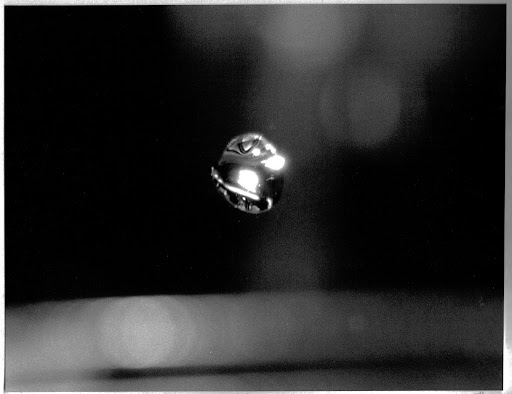


 This is a shot of the Chosky, obviously! Just want to put it on so we are thinking of the cave as this entire space. This is our magic box.


 The Human Condition by Rene Magritte


